Understanding subtle language nuances can make a big difference in communication. One such phrase that often causes confusion is “feigning meaning.” What does it really mean? When is it used and how does it differ from similar expressions like pretending or faking?
In this article, we’ll break down the meaning of feigning, explore real-life examples, discuss synonyms and explain how the term is commonly used in writing and conversation.
What Is the Meaning of Feigning?
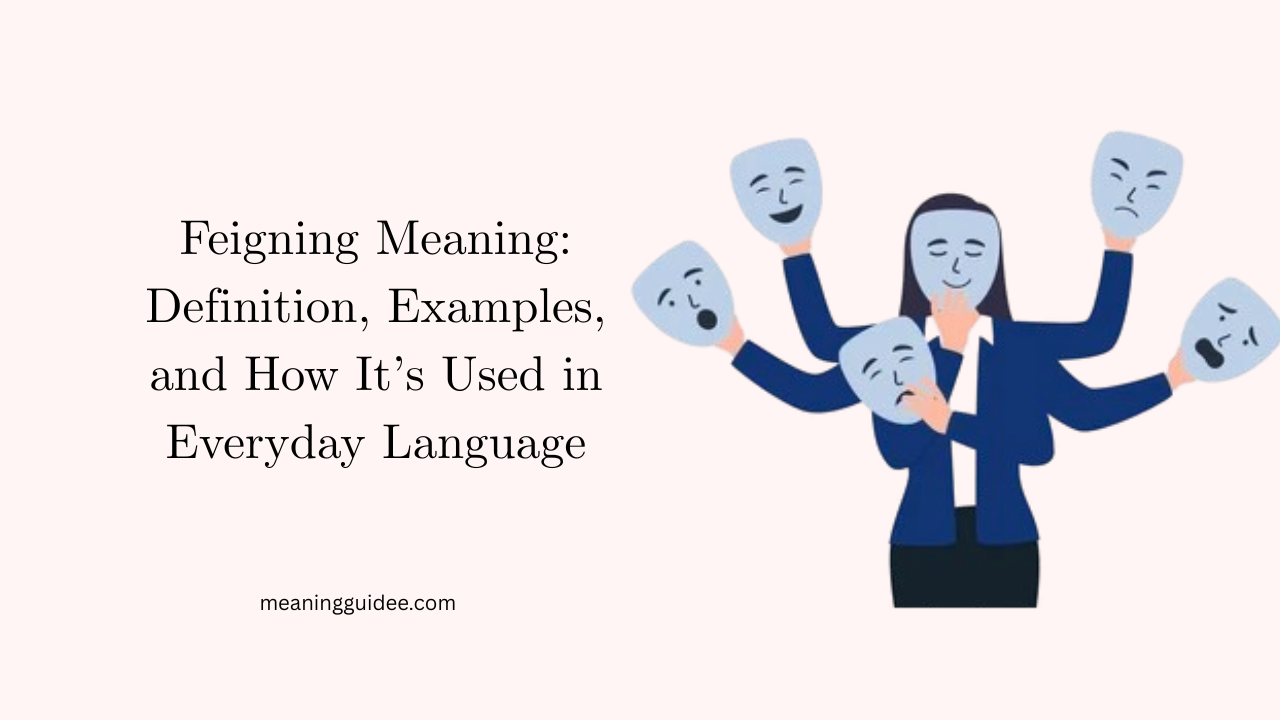
Feigning means pretending or giving a false appearance of something, usually intentionally. When someone is feigning, they are not being genuine—they are acting in a way meant to mislead others into believing something that isn’t true.
Feigning meaning (definition):
The act of deliberately pretending to feel, think or be something that one is not.
The word “feign” comes from the Latin fingere, meaning to shape or form which later evolved to mean to invent or pretend.
Feigning Meaning in Simple Terms
In everyday language, feigning is often used to describe:
- Fake emotions
- False ignorance
- Pretended illness
- Insincere reactions
For example:
- She was feigning interest in the conversation.
- He feigned surprise when the secret was revealed.
In both cases, the person appears genuine on the surface but their reaction is not real.
Common Examples of Feigning
Here are some practical examples to help clarify the meaning:
1. Feigning Ignorance
This is one of the most common uses.
- He feigned ignorance to avoid taking responsibility.
👉 Meaning: He pretended not to know, even though he did.
2. Feigning Illness
- She feigned illness to skip school.
👉 Meaning: She wasn’t actually sick but acted like she was.
3. Feigning Emotions
- The actor feigned anger during the scene.
- She feigned happiness at the event.
👉 Meaning: The emotions were performed, not genuine.
Feigning vs Pretending: Is There a Difference?
Although feigning and pretending are similar, there’s a subtle difference in tone.
| Term | Usage | Connotation |
|---|---|---|
| Feigning | More formal, deliberate | Often deceptive or strategic |
| Pretending | Casual, everyday | Can be playful or harmless |
Feigning is more likely to suggest intentional deception, while pretending can be innocent (like children pretending to be superheroes).
Synonyms for Feigning
If you’re writing and want variety, here are some common synonyms:
- Pretending
- Faking
- Simulating
- Affecting
- Putting on
Example:
- He simulated confidence during the interview.
- She affected a calm demeanor.
How Is Feigning Used in Writing?
In fiction, journalism and academic writing, feigning is often used to describe psychological states or social behavior.
Writers use it to:
- Reveal dishonesty or manipulation
- Show emotional conflict
- Add depth to characters
Example in literature:
He feigned loyalty while secretly plotting his escape.
This adds tension and insight into the character’s true intentions.
Why Understanding Feigning Meaning Matters
Knowing the meaning of feigning helps you:
- Interpret tone and intent more accurately
- Improve reading comprehension
- Write more precisely and persuasively
It’s especially useful in:
- Literature analysis
- Professional communication
- Psychology and behavioral discussions
Frequently Asked Questions About Feigning Meaning
Is feigning always negative?
Not always, but it often carries a negative or deceptive implication. However, in acting or storytelling, feigning can be neutral or even necessary.
Can feigning be unintentional?
No. Feigning is deliberate by definition. If it’s unintentional, it’s not feigning.
Is feigning the same as lying?
Not exactly. Lying involves false statements, while feigning involves false behavior or appearance. Someone can feign without speaking at all.
Final Thoughts on Feigning Meaning
To sum it up, feigning meaning refers to the intentional act of pretending—whether it’s emotions, knowledge or conditions. It’s a powerful word that adds clarity and depth when used correctly.
By understanding how and when to use feigning, you can communicate more effectively and interpret others’ actions with greater insight.